
US vs China

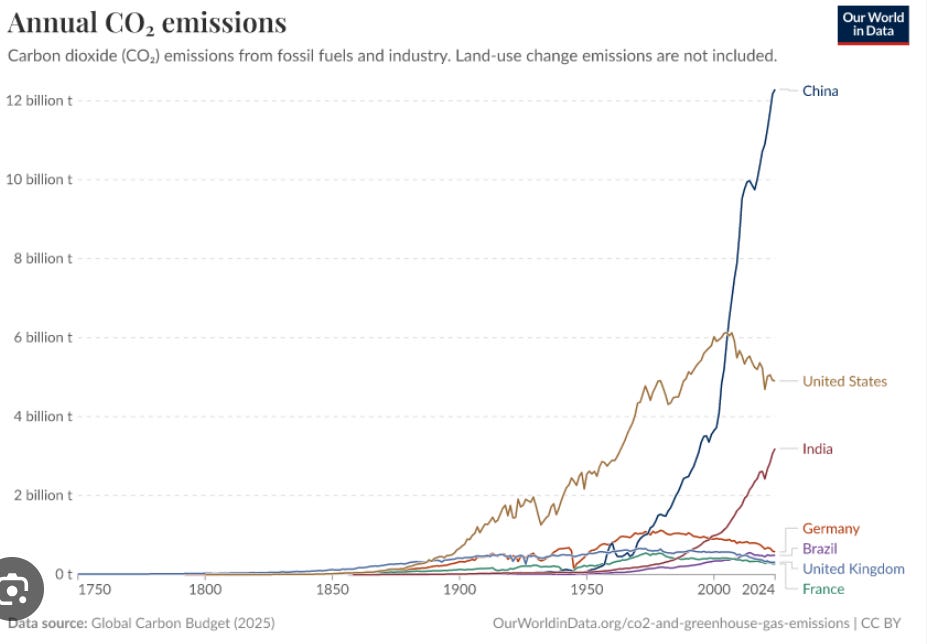
As the US moves further with protectionist policies and tariffs, the trade with China should slow down if not decline entirely. This already causes Chinese GDP growth to struggle. Luckily for China it benefited immensely from the war in Ukraine (cheap sanctioned Russian oil/gas, China sells drones and military tech to both Ukraine and Russia etc) as well as filling the gaps on the world stage where the US withdrew. So what should we expect in a year ahead? Before predictions lets briefly recap what happened with the US economy in the last few decades vs the Chinese. I think these three charts summarize it very well:
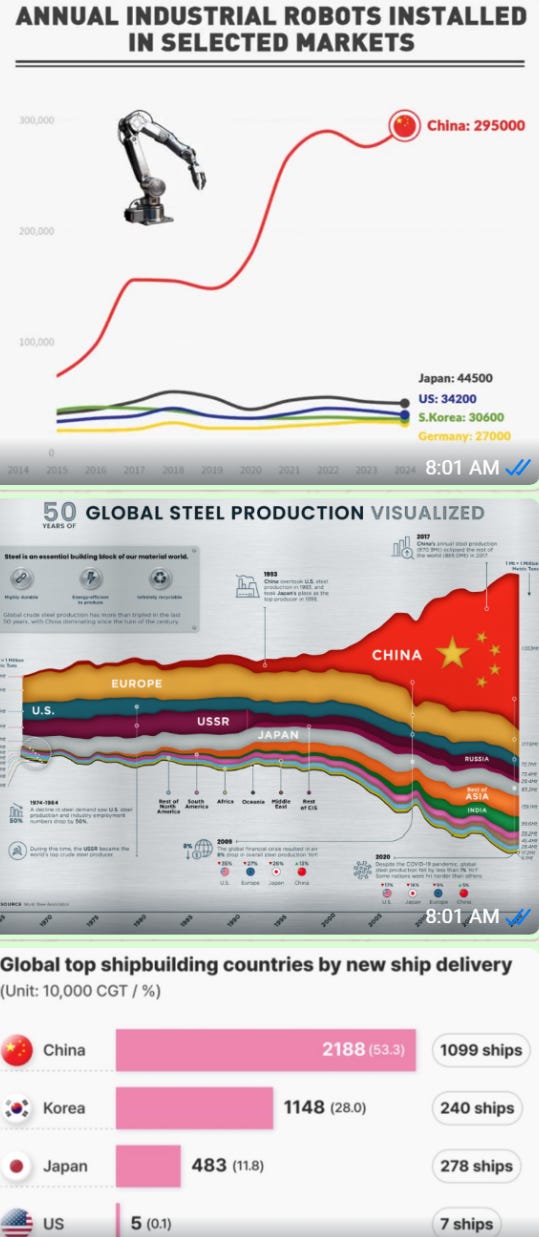
As we can observe the US lagged behind in terms of robotics, steel production, and ship building many times over compared to China. Those select industries indicate how powerful the advanced Chinese industrial economy is; and we can see that the US is quite weak in terms of industrial production right now. The US clearly was winning in tech, financial services and specific ad-hoc fields, but the industrial economy, power generation, mining and agriculture lagged… They are what I call the “real” economy.
So why did that happen? Explaining this decline by just “oh China had cheaper labor so everyone moved the labor intensive production there” is not enough because there are many places in the world with cheap labor even today but they continue to stagnate. Clearly other factors played a role. I believe certain in my opinion dumb domestic policies led to China winning the industrial race:
China was not suffocating the industries with unnecessary regulations like the US did (climate change related overregulation, high taxes and overprotective labor laws).
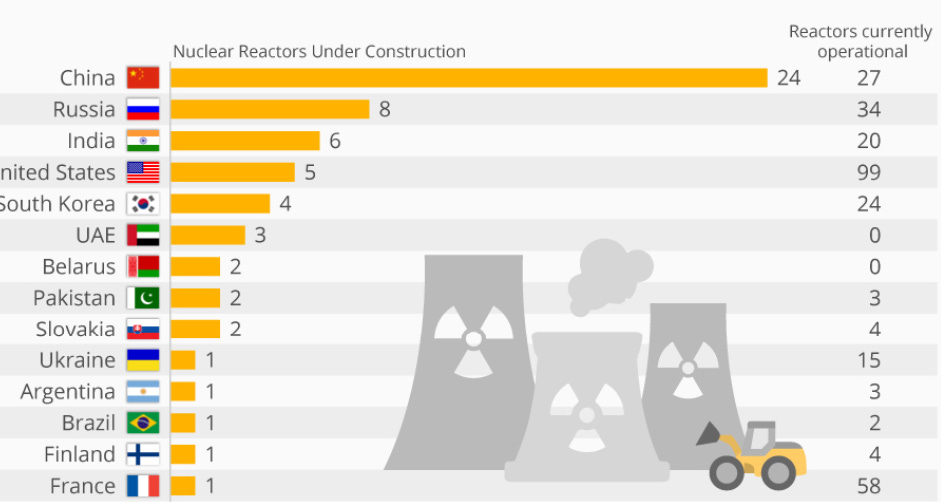
China built cheap electric power sources - nuclear, while the US didn’t build a single nuclear station in years, wasting money on expensive and unpredictable “sun and wind energy”.
China executed a long term well thought out industrialization strategy with major highways and train routes built which require decades to build and plan properly. Meanwhile the US was stuck in nonsensical debates about things that have very little to do with the lives of ordinary people and the real economy. The US completely lacked the coherent country-wide strategy of how to move forward and tackle competition.
China enjoyed favorable tariff policies and other regulations minimizing burden on domestic companies while maximizing burden on the external trade partners. Moreover, a lot of copyright laws were clearly violated by Chinese companies and were not properly punished by any international bodies.
So what should we expect next? The US is trying to change these unfavorable developments but the road to re-industrialization will not be easy. These times remind me a bit of the late 1970s. The US back then experienced de-industrialization due to global competition as well as the closure of many factories that were functioning post WW2. At the same time the US decided to completely abandon US dollar 1:1 convertibility to gold. This resulted in the famous stagflation scenario. The solution to that was to execute a very strict monetary policy under Volker’s direction. The US exited the stagflation period in the mid 1980s with an amazing boost in productivity and the renewed enthusiasm about the prospects, which peaked at the end of Reagan Presidency as well as US’s main global competitor - USSR collapsing a few years later.
If the US is serious about solving the stagflation problem and to reindustrialize we should expect a few more years of pain and a more strict monetary policy which then should finally heal the US economy. Of course we do not know if the current administration even plans on strict policies. So far it feels the opposite, at least in the news… All I know is for the US the worst outcome is if it fails to reindustrialize while losing the edge in the tech and financial services. In that case the US will lose global relevance as a country and the US currency could collapse as well. So I am watching closely how the companies are moving back the production capacities which should solve all the main long term problems: stagflation, unemployment, US currency strength, political stability, global competitiveness.